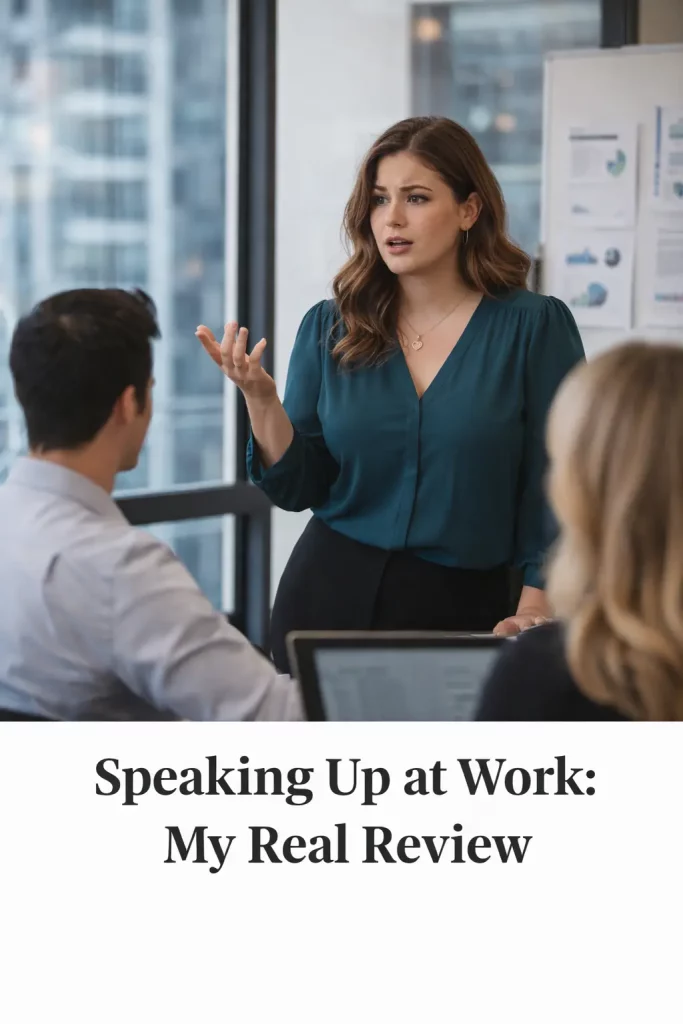
Speaking Up at Work: My Real Review

I’m Kayla. I’ve worked in tiny start-ups and big teams with layers. I care a lot about voice at work. Do people get to speak? Does it help? Here’s my take, with the messy parts included.
For readers looking for an even deeper dive into the theme of speaking up at work, check out my expanded review on Free Press Index here.

Quick take

Freedom of speech at work feels brave and scary at the same time. When it works, people fix problems fast. When it fails, folks get quiet. My review? Worth it—but only with clear rules and kind leaders.

What I mean by “freedom of speech” here

I don’t mean a free pass to be rude. I mean a culture where you can:

  • Ask hard questions
  • Share pay info with co-workers (yes, in the U.S. you can)
  • Point out risks or bugs
  • Say “I don’t agree,” and not get burned for it

One note. The First Amendment covers the government, not your boss. But you still have rights to talk with co-workers about your pay and working terms. That’s the law. Simple, but big.
For the official word, the National Labor Relations Board explains your right to discuss wages in plain language here.
If you want to see how these rights play out beyond the workplace, the Free Press Index collects real-world stories and legal updates worth bookmarking.

Real moments from my jobs

1) The all-hands that changed my mind

At a 40-person start-up, the CEO used Slido for open Q&A. We could upvote questions. My hands shook. I asked about pay bands by level. Dead quiet. Then he pulled up a slide with ranges. He wasn’t slick; he was honest. People exhaled. After, three folks DMed me thanks on Slack. That trust lasted the whole year.

2) The “speak up” hotline that didn’t

At a larger company, there was a “speak up” hotline. Fancy poster. I filed a note on sales goals that pushed us to bundle stuff in a way that felt off. I got a canned email. Two weeks later, my manager asked why I “went around him.” No one was rude. But I felt watched. I stopped sharing. That’s how culture breaks. Not with a bang—just a slow hush.

3) Slack gone sideways, then saved

Our product group once blew up in Slack. A teammate posted a long rant on a risky launch. People piled on. It got hot. Our manager jumped in, but not to shut it down. He set rules. No name-calling. Bring data. Offer a fix. He made a “Hot Takes Friday” channel with a template: “Problem. Data. Impact. Try this.” It turned noise into signal. We kept it.

4) The VP I corrected, and the invite that vanished

In a roadmap review, I told a VP that his timeline missed testing. I was calm, but firm. He smiled. Later, I noticed I wasn’t invited to a follow-up. No one said a word. That’s the quiet cost people fear. Not a blow-up. A slow freeze.

5) Burnout, one tiny win

During the remote surge, we had an anonymous survey with Polly. I wrote, “Meetings are eating lunch and life.” Others felt the same. The COO set “No Meeting Wednesdays.” It wasn’t magic, but it gave us air. Small wins add up.

6) Talking pay at lunch

A teammate asked what I make. I told her. Another person shushed us. “HR will flip.” We pulled up the HR poster by the kitchen that says we can talk about pay. The shush stopped. A week later, we saw real gaps by level. That chat led to fixes. Sunshine helps.

That same truth-hunting impulse spilled over into side chats about common health myths. One lunchtime debate revolved around whether boosting testosterone can still make an adult taller—so I went looking for real data and came across this clear research breakdown on the topic here. It cuts through hearsay with cited studies, so anyone curious can quickly see what’s possible, what’s hype, and whether it’s worth talking to a doctor.

What helped

  • Leaders who answer hard questions in public
  • Clear rules: kind tone, facts, and next steps
  • Safe channels: anonymous forms, office hours, AMAs
  • Follow-through. Even a “we can’t yet” builds trust
  • Training for managers. Not a one-off. Real practice
  • An atmosphere of psychological safety (McKinsey has a concise explainer here)

What hurt

  • Fake feedback boxes with no real action
  • Soft payback: fewer invites, cold shoulders
  • Rules that are fuzzy, or only for some people
  • Jokes that punch down. People remember those
  • Long rants with no data, no path

My small playbook for speaking up

I’m still learning. Here’s what works for me.

  • Pick the right lane: quick Slack note for small stuff; doc or 1:1 for big items
  • Start with the goal: “We want a safe launch by June”
  • Share the facts: two dates, a chart, a client quote
  • Ask a clear ask: “Can we add a week for testing?”
  • Offer help: “I can run the pilot group”
  • Keep it kind. Firm, but kind lands better
  • Document major issues in a shared doc
  • Know the basics of your policy and your rights

You know what? I used to wait. I thought, “Someone higher up will say it.” They didn’t. So now, I prep a short note and speak once. Then I breathe.

Taking a mental breather matters, too. After a week of hard truths and tougher meetings, I like stepping outside the office bubble to meet new faces and reset. If you’re in the southwest Chicago suburbs, the Plainfield-focused Backpage alternative on OneNightAffair is a handy starting point—you can browse it here. The page gathers local personal ads and nightlife posts in one spot, making it simple to find a low-key hangout or new connection that helps you decompress before diving back into work.

A tiny curveball

Free speech at work can go too far. Noise can drown care. I say this as a fan of messy talk. We need guardrails. We need grace. Weird combo, right? But it works.

My verdict

  • Openness: 4.5/5 when leaders model it; 2/5 when it’s a poster only
  • Safety to ask hard things: 3.5/5 across my jobs
  • Real change from feedback: 4/5 when action is public and tracked

Final word: Speaking up is a muscle. Teams grow it with trust, time, and clear rules. When it holds, work gets better—and people do, too. I’ll keep using my voice. Soft, steady, and—when it counts—loud.
Published
Categorized as Work

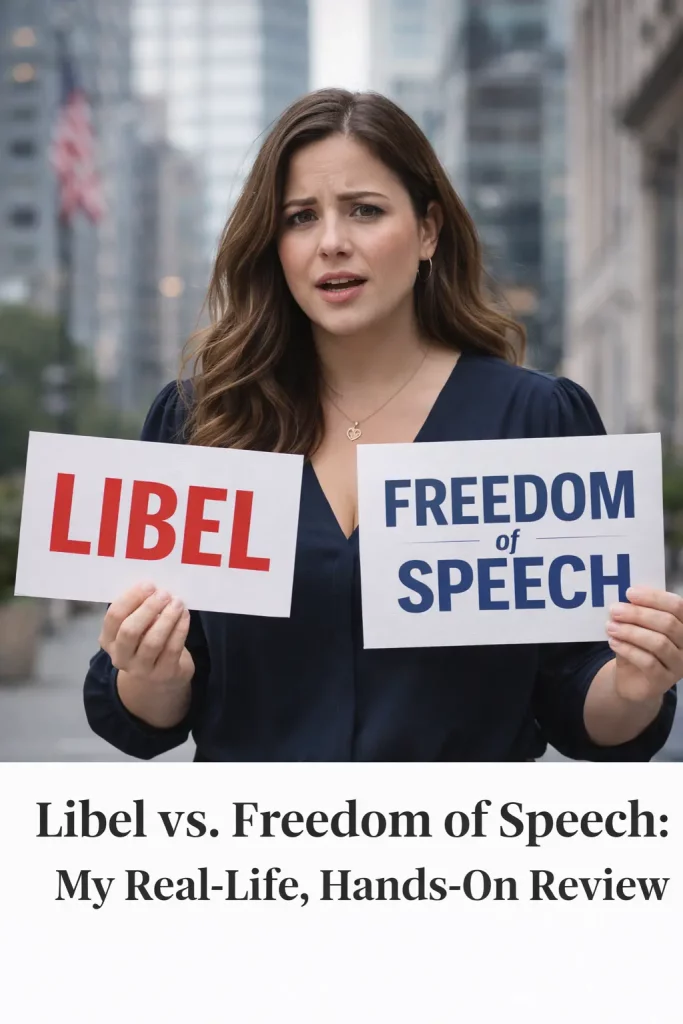
Libel vs. Freedom of Speech: My Real-Life, Hands-On Review

I test gear. I test apps. And, weirdly, I test words. Words can help, and they can hurt. I learned that the hard way. So here’s my plain, first-person take on libel vs. free speech—what I’ve lived, what I’ve seen, and what I now do every time I hit “post.” You can also read my deeper dive on the same tug-of-war here.

Quick refresher, no fluff

  • Freedom of speech: You can share ideas, opinions, and facts.
  • Libel: A false written statement that harms someone’s reputation.
  • Slander: Same idea, but spoken.
  • One key rule: Opinions are safer. False facts can get you sued.

Need more context? You can explore a trove of global press-freedom data and real-world defamation cases at Free Press Index to see how different countries balance speech rights and libel protections.

Simple, right? Not always.

The brunch post that bit me

A few years back, I posted a spicy review of a local brunch spot. I won’t name them. The eggs were cold, and I thought I saw a fruit fly near the juice bar. I wrote, “They serve dirty food.” That line? It read like a fact. And it hurt them.

The owner messaged me. It wasn’t a rage text. It was calm. They shared their health report and a same-day re-check. Clean. Like spotless clean. I felt my stomach drop.

I posted an update. I said I was wrong to state it as fact. I kept my opinion on the cold eggs. I also added context: I saw what looked like a fly, but I didn’t confirm it. Was it fun to admit that? Nope. Was it right? Yes.

That day taught me this: “In my experience” if it’s an opinion. Evidence if it’s a fact. If you’re not sure, say you’re not sure.

The time our company got hit with lies

I also run community for a tech brand. One week, a user claimed our device “stores your photos and sells them.” Strong claim. Also false. It spread fast. Folks were scared.

We gathered proof. We showed our privacy policy in plain words. We posted screenshots of settings. We asked the poster to correct the claim. We flagged the false posts. Our lawyer talked about “libel” and “harm.” I drank too much coffee.

It worked. Most people got it. A few did not. But our reply was clear, calm, and true. That’s the thing—free speech does not mean free from facts. Claims need proof. For a blow-by-blow look at raising hard truths inside a company, peep my candid write-up on speaking up at work.

Big cases that shaped my thinking

I didn’t make these up. These are real, public cases you can look up by name.

  • New York Times v. Sullivan (1964): This set a high bar for public officials. To win a libel case, they must show “actual malice”—which means the speaker knew it was false or didn’t care to check. It protects hard reporting. It also forces care. For a concise historical recap, see the Britannica overview.

  • Hustler Magazine v. Falwell (1988): A wild one. A crude parody ad caused a lawsuit. The court said satire, even harsh satire, can be protected if no one would take it as a real fact. Parody lives. Feelings still get bruised, though. You can read the full LII summary for the case here.

  • “McLibel” case (UK, 1990s): Two activists passed out leaflets accusing McDonald’s of bad stuff. McDonald’s sued. The case dragged on for years. Parts were found false. Parts were not. It showed how tough UK libel laws were back then. It also showed how speech and power can clash.

  • Alex Jones and the Sandy Hook families: Courts found he defamed the families with false claims. Huge damages followed. The harm was deep and very real. This one still makes my chest heavy.

  • Dominion Voting Systems vs. Fox News (settled in 2023): Big payout. Why? The claims aired about the company were false, and the case showed what ignoring truth can cost. Words aren’t free when they break people.

These cases don’t all say the same thing. But they draw the line. Opinions, fair comment, parody—often okay. Stated-as-fact lies that harm—often not.

Ratings, if you’ll let me be cheeky

  • Freedom of speech: 5/5 for courage. 5/5 for sunlight. It lets us question power, share joy, and fix mistakes in public.
  • Libel laws: 4/5 for guardrails. They protect people from lies. But they can be used to scare folks too, which is messy.

Do these two clash? Sure. They also keep each other honest. It’s a little like brakes and a gas pedal. You need both to steer.

What I do now, every time I publish

You know what? I still post hot takes. I just post them smarter.

  • If it’s my view, I say it’s my view.
  • If it’s a fact, I show where it came from.
  • If I’m not sure, I say I’m not sure.
  • I keep screenshots, dates, and names (private unless needed).
  • I ask for comment on serious claims, even if it slows me down.
  • I fix mistakes fast. No weird pride about it.
  • I avoid loaded words that sound like verdicts: “fraud,” “scam,” “stole,” unless a court said so or I have iron proof.
  • I learn my local laws. Anti-SLAPP laws can help when a lawsuit tries to shut you up. Not everywhere has them.

These habits don't just apply to Twitter threads and company blogs. Even on niche social spaces where conversations can get, well, a little more playful—think dedicated French swinger communities like NousLibertin—the expectations around truthful statements and defamation still exist; browsing the platform’s guidelines and user discussions can give you a real-world sense of how free expression coexists with clear rules against harmful claims. Closer to home, a regional classifieds board operating in the post-Backpage era—take a look at Backpage Deland—offers another practical illustration; the site’s posting rules walk you through how free-form personal ads must still dodge libel by sticking to verifiable statements and providing clear disclaimers.

A small digression about tone

Tone can trick you. “They’re crooks” feels like a joke on a bad day, but to a reader, it can sound like a claim. Instead, I’ll write, “This felt unfair,” or “I think this policy misleads users.” See the difference? One is a punch. The other is a clear opinion.

Also, caps lock is never your friend.

When I still get nervous

Sometimes I write and my heart thumps. I’ve paused a post for a day. I’ve asked a friend to read. I’ve cut a line I loved because it read like a fact I couldn’t prove. Do I like that? Not really. But I like sleeping at night.

And here’s the twist: the stuff I publish now is stronger. Cleaner. Harder to shake. People trust it more. That feels good.

Final word from a mouthy reviewer

I love free speech. I also love fairness. Libel law, when used right, protects regular people from lies that stick like gum on a shoe. The trick is simple to say and hard to live: Speak bold truths. Label opinions as opinions. Correct fast. Keep receipts. And remember that people—real people—sit on the other side of your screen.

Freedom of speech lets us talk. Libel law makes us think. I need both. So do you.

Published
Categorized as Work

My Honest Take: Freedom of Speech vs Slander

I live online. I post. I review coffee spots, parks, and little gear. I talk. A lot. So I care about speech—how it feels, and how it can hurt. Let me explain what I’ve seen, up close. For another personal breakdown of how freedom of speech can bump into slander, I put together this longer field note that digs even deeper.

When free speech feels good

I once wrote a blunt Yelp review about a gym. The music was so loud my Apple Watch thought I was in a spin class. Funny, but true. I shared my visit date, the class name, and a photo of the decibel meter app on my phone. The owner replied the next day. He dropped the volume rule. Class felt better the next week. That’s speech doing good.

I also posted in a neighborhood group about a park light that flickered all night. I shared a short video. A city worker saw it. They fixed the bulb by Friday. No drama. Just facts, posted clear.

I’ve praised places too. A tiny bakery gave me a warm cinnamon roll because I looked cold. I told that story. People went. The shop got busy. That’s speech lifting folks up.

When speech goes wrong

Now the tough part. Slander. It’s not a big legal word to me. It’s a bad rumor told like it’s true. And it stings.

  • A local Facebook group once said I “stole packages.” My hands shook when I read it. I asked for proof. There was none. I shared doorbell clips of me hauling my neighbor’s boxes inside during a rainstorm. The admin pulled the post and pinned a correction. Some folks said sorry. Some didn’t. It still stuck for a bit.

  • At work, a coworker hinted in Slack that I padded my hours. I felt sick. I showed my time logs and calendar invites. HR checked. It was false. We cleared the record. The coworker had to retract the message in the same thread. That mattered.

  • On our kids’ team chat, a parent said another mom was drunk at a game. It wasn’t me, but I watched her face go pale. A simple “She seemed off” turned into “She was drunk.” See that switch? That’s the line. Saying how something felt is one thing. Stating a harmful “fact” with no proof is another.

You know what? It doesn’t take many words to bruise a name.

If you're facing similar office whisper campaigns, this straightforward piece on speaking up at work helped me frame my response.

How I check myself before I post

I talk a lot. So I use a silly little checklist. It keeps me honest.

  • Is it true? Like, can I show a receipt, a photo, an email?
  • Is it my experience? I use “I” statements. “I waited 45 minutes.” Not “They scam people.”
  • Is it clear it’s an opinion? “I think the service was slow.” Not “They never serve on time.”
  • Could this hurt someone’s life if I’m wrong? If yes, I slow down.
  • Would I say it in the same tone face-to-face?

If I can’t back it up, I rewrite or I skip it. Simple saves me.

Platforms aren’t the same

Different places, different rules. I’ve learned by bumping into them.

  • Facebook Groups: I’ve reported false claims. They asked for screenshots and timestamps. One mod asked me to post a correction myself. That felt fair.
  • Yelp: They kept my gym review because I gave details and proof. They removed a snarky owner reply that called me a liar. They said it broke their “personal attack” line.
  • Nextdoor: Fast to flag rumors. Slower to fix them. I’ve seen threads locked, but the first false line sits there like a stain.
  • Reddit: Mods vary. Some subreddits delete fast. Some like evidence. One mod asked me to add a source or mark a line as opinion. I updated. Post stayed.

Want a different example of how quickly reputations can rise or tank? Check out a live local classifieds board like Backpage Rosemead—browsing its constantly updating listings and comment threads shows how fast unverified claims get echoed, challenged, or deleted, making it a useful case study for anyone tracking the real-world stakes of online speech.

Another arena where speech and privacy collide is in photo-centric apps that promise messages disappear. If you’ve ever wondered what can happen when someone saves or forwards a risky image without consent, this straight-talk guide to Nude Snap shows you how such platforms really handle deleted pics, outlines the legal angles around non-consensual sharing, and gives step-by-step safety tweaks you can apply right now.

None of this is perfect. But receipts help a lot. Screenshots. Dates. Photos. Calm words.

A quick, plain recap

  • Free speech: You can share your views. You can be sharp. You can be funny, even rude.
  • Slander: A false, harmful claim said like a fact. Said out loud. If it’s written, folks call it libel (for a detailed comparison, see this hands-on review of libel versus free speech).
  • Big note: Laws vary by place. If things get heavy, talk to a real lawyer. I’m just sharing what I’ve lived.
    If you want to see how courts have handled bigger speech disputes, take a quick scroll through the Free Press Index for real-world examples.
  • Need a concise legal primer on how libel and slander differ? This Britannica explainer breaks it down.

If you’re the target

I’ve been there. Here’s what helped me.

  • Save everything. Screenshots with dates.
  • Ask for a correction. Be brief and calm.
  • Share your proof once. Don’t argue for days.
  • Tell a mod or admin. Use their report form.
  • If it keeps going, speak to a lawyer. Even a short consult can help you see your next step.

If you’d like a step-by-step guide from legal advocates on pushing back, the American Judicature Society offers clear advice on how to respond to false accusations.

If you’re speaking up

You can still be bold. Just build on truth.

  • Stick to what you saw, heard, or did.
  • Share receipts when you can.
  • Mark opinions as opinions.
  • Skip guessing about motives. “They hate locals” is a guess. “They asked me for ID twice” is a fact.
  • If you mess up, fix it fast. Say “I was wrong.” Post the correction where you posted the claim.

A small, real-world script that worked

When I cleared the “package thief” rumor, I wrote:

“Hi all—this claim is false. Here are time-stamped clips showing me moving my neighbor’s boxes inside during the storm. I’ve asked the mods to remove the post. If you reshared it, please correct it. Thanks.”

Short. Clear. Proof attached. No name-calling. It worked.

My verdict, as a heavy user of words

Free speech is like a sharp kitchen knife. It chops onions fast. It also cuts fingers if you fling it around. I still say use it. Slice clean. Label spice as “spice.” Keep the cutting board dry. And if you nick someone, own it and patch it up.

Would I recommend speaking freely? Yes—5 stars when it’s honest and fair. Two stars if you treat rumors like facts. Zero if you try to wreck a name.

Say what’s true. Mark what’s opinion. Bring receipts. And when you’re not sure? Take a breath. Then say it right.

Published
Categorized as Work